

Freelance Graphic Designer · A Practical Guide
Marketing Materials for Small Businesses: What Should You Outsource to a Freelance Graphic Designer?
A small or medium-sized business rarely produces all of its communication materials at the same time. A brochure is created before a meeting, a kakemono is prepared for a trade show, and a sales presentation is updated internally. The WordPress site stays online for several years, and then a CSR report or a QHSE booklet is produced. This accumulation often creates a problem: the materials exist, but they don’t present a consistent image. A freelance graphic designer can step in without a cumbersome process to assess the need, organize the information, and deliver usable files. The question then becomes a practical one: which materials should be entrusted to a freelance designer, in what order, and with what elements?
When a Small Business Should Hire a Freelance Graphic Designer
Hiring a freelance graphic designer makes sense when existing materials no longer reflect the company’s true standing. The need may be one-time or more extensive: redesigning a brochure, creating trade show materials, updating the visual identity, improving a presentation, or redesigning a WordPress site.
What types of projects should you assign to a freelance graphic designer?
Not all media are used at the same time. Some help build credibility. Others are used to sell, explain, reassure, or highlight an offer. The choice depends on the business context.
Visual Identity: Laying the Foundation Before Developing Variations
A visual identity serves as the foundation for both print and digital media. It establishes guidelines for the logo, colors, typefaces, composition, image style, pictograms, and layout principles.
Sales brochure: the material that stays with the client after the meeting
Sales brochures remain useful in B2B because they continue to have an impact even after the initial interaction. They can be printed, sent as a PDF, attached to an email, or forwarded to another decision-maker.

Things to Avoid on a Brochure
- Too much text per page.
- No hierarchy.
- Poor-quality or poorly cropped images.
- Isolated figures without context.
- A conclusion that leaves no room for action.
- File not ready for printing.
Kakemono and roll-up banners: instant visibility at trade shows
The purpose of a kakemono is to convey a message quickly. At a trade show or event, no one reads a sign the way they would a brochure. The message must be short, visible, and properly prioritized.

Sales Presentation: Structuring Your Talk
A sales presentation is designed to support a meeting. It should complement the speaker’s remarks without becoming a mere series of slides. The graphic designer focuses on the flow, hierarchy, readability, and visual rhythm of the presentation.
Showcase Website, WordPress, or Redesign: Building Credibility After the Initial Contact
The website often serves as a way to verify information. A prospect may learn about the company elsewhere and then visit the website before responding, requesting a quote, or passing the name along internally.
What kind of web project should you plan for?
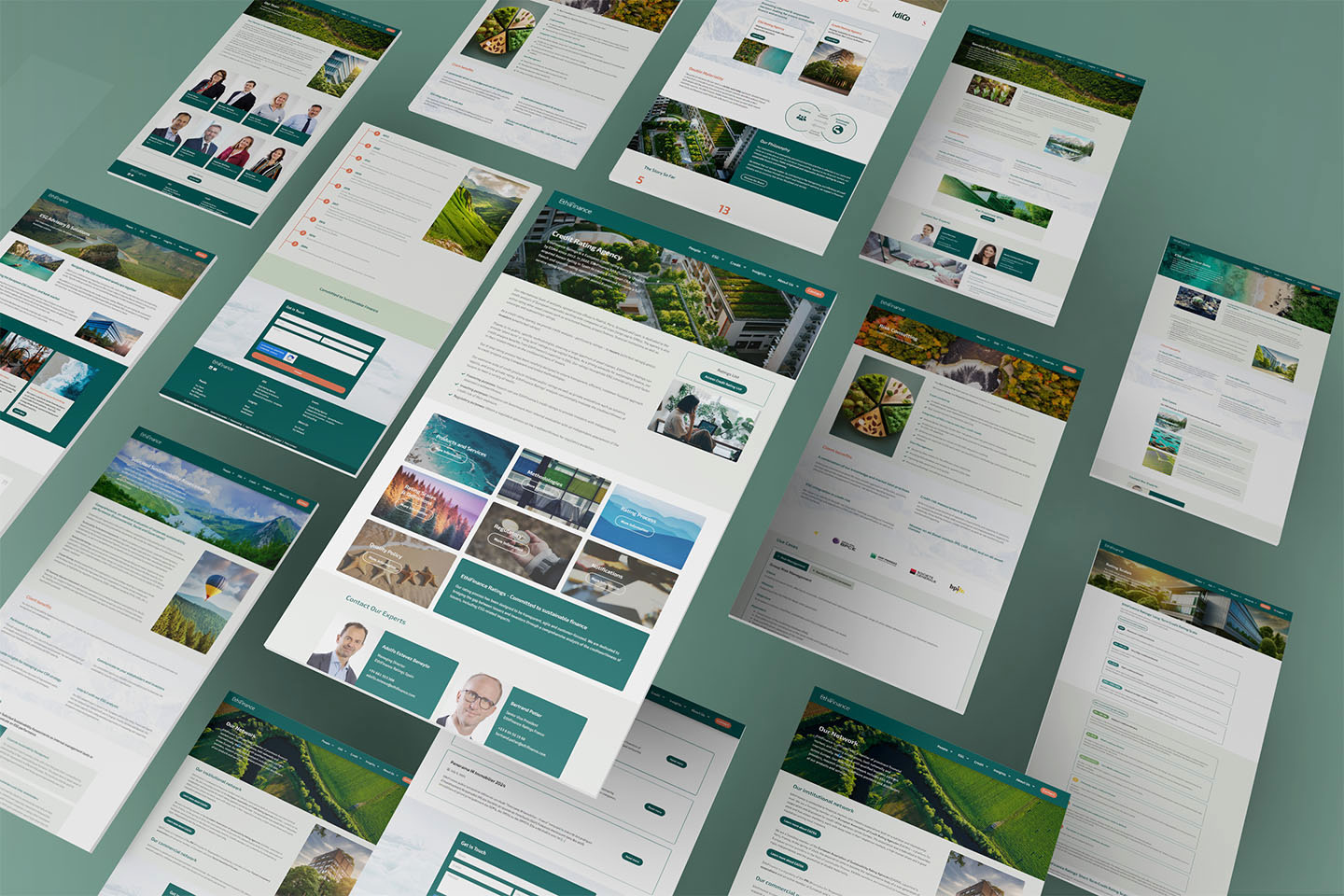
Signs That a Website Is Undermining Perception
- Outdated design.
- Pages that are too long or poorly organized.
- Poor mobile version.
- Lack of evidence or references.
- Form is not very visible.
- Generic messages.
- Slow performance.
Specialized publications: CSR reports, QHSE reports, booklets, and guides
Some documents are less sales-oriented but very important for the company’s image. CSR reports, QHSE handbooks, internal guides, field manuals, and safety posters all require careful layout.

Budget, timeline, and level of finish
The price of a publication does not depend solely on the number of pages. Two 8-page brochures can require very different amounts of work depending on the condition of the text, the complexity of the content, and the level of creativity expected.
Which platform should we prioritize?
The priority approach is the one that addresses the main obstacle. An SME can improve its image without overhauling everything, provided it chooses the right starting point.
Where should I start?
FAQ
Yes, if the scope of the project is well-defined. For a brochure, a kakemono, a presentation, a visual identity, a showcase website, or an editorial document, working with a freelancer is often sufficient. An agency becomes more useful for large-scale campaigns or projects that require multiple disciplines working in parallel.
Start with the element that most hinders sales or credibility. If the overall image is weak, the visual identity or website should be prioritized. If a trade show is coming up, the brochure and roll-up banner take priority. If the product or service is difficult to explain, the sales presentation becomes more urgent.
It’s preferable, but not required. The project can start with an outline, notes, or existing material. However, the condition of the texts must be specified from the outset, since clarifying the content affects the amount of time required.
He can prepare files for printing and check basic technical requirements: format, bleed, margins, PDF export, and image resolution. The order placed with the printer then depends on the arrangements made with the client.
The brochure should be readable on its own, whether it’s handed out after a meeting or sent via email. A sales presentation is primarily intended to support a spoken presentation. Both materials can convey the same messages, but their structure must be different.
A redesign or update is necessary when marketing materials appear disjointed, outdated, or inconsistent. If the logo, colors, typefaces, and layouts vary from one document to another, the visual identity needs to be standardized.
The turnaround time depends on the format, the volume of content, and the condition of the materials provided. A simple file can be processed quickly. A brochure, a detailed presentation, a CSR report, or a website redesign take more time, especially if the text needs to be structured.
You must specify the type of medium, the intended use, the format, the deadline, the available content, and any technical constraints. An older document—even if it is imperfect—can also help clarify the scope of work expected.
Conclusion
An SME can create professional marketing materials without a cumbersome organizational structure. The key lies in defining the scope: intended use, available content, timeline, format, and expected level of polish.
A freelance graphic designer can address specific needs: visual identity, sales brochures, kakemono banners, presentations, showcase websites, WordPress redesigns, CSR reports, QHSE documents, or PDF materials. The right solution isn’t necessarily the most eye-catching one. It’s the one that addresses the core issue: an outdated image, a vague message, a lack of marketing materials, illegible content, or a website that undermines credibility.
Need professional communication materials?
I design sales brochures, kakemonos, presentations, visual identities, and WordPress websites for small and medium-sized businesses, startups, and B2B companies.
Request a quote